

Kooikerhondje
Origin: The Netherlands
Height: 35-40 cm (14-16 inch)
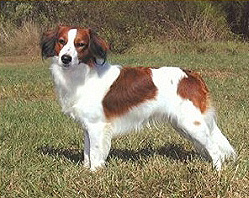
ARBA Champion RedGold’s Casanova
Photo : RedGold Kooikerhondjes
CLICK HERE to View Breeder Listings
Breed Profile
Although the Kooikerhondje is a very old breed originating in the Netherlands, official recognition by the Dutch Kennel Club did not come until 1966 and the United Kennel Club recognized the breed in 1996. Originally bred as a working dog, to lure ducks and hunt vermin, the Kooikerhondje is also a loving family companion. For many years, the Kooikerhondje was used as a duck decoy and the breed’s name comes from the name of the decoy trap “eendenkooi” and means “decoy dog” or “dog of the decoyman.” Today, most Kooikers are found in Holland, throughout Scandinavian countries and in Europe. In North America, there are a few in Canada and possibly 100 in the U.S.
He is a kind, attentive, playful and alert dog, always ready and willing to work. The Kooikerhondje is also very sensitive, intelligent, and independent. This breed is not recommended for the first time dog owner as he can be very challenging, requiring strong leadership and gentle handling. With proper training, the Kooikerhondje becomes a deeply loyal and devoted companion. If raised with children, the Kooikerhondje generally gets along very well with them.
Kooikerhondjes also make very good watchdogs as they are naturally suspicious of strangers and protective of their territory. Very rarely will this breed seek attention from a stranger and is more likely to flee or growl if approached.
Because of the breed’s working history, the Kooikerhondje is an active dog with a great amount of stamina. His attentive attitude and eagerness to please makes him ideal to participate in many dog sports and activities, such as agility, flyball, discdog, obedience, tracking and hunting. The Kooikerhondje is also known as an avid swimmer and loves the water. This high energy dog must be kept busy to avoid boredom which can lead to destructive behaviour.
The Kooikerhondje’s double coat is medium-long and can take up to two years to fully mature. With a soft, silky texture, the coat can be either straight or wavy. The coat colour is a distinct and clear orange-red patches on white. Colour should dominate. One distinguishing feature of the breed is the long black tips that can be seen on the dog’s ears. The length and amount of these “earings” are determined by genetics.
Health Issues
The Kooikerhondje breed is generally very healthy despite a small gene pool. This is mainly due to very strict breeding rules that have been put in place and responsible breeders working hard to eliminate hereditary diseases through testing and selective breeding. However, there are still some hereditary diseases found in the breed, these include:
- Cataracts — Kooikerhondjes have some eye problems including cataracts. Breeding stock should be tested and found free of cataracts prior to breeding.
- Epilepsy — Epilepsy may be hereditary or idiopathic – caused for some unknown reason. In either case, dogs with epilepsy should not be bred.
- Hereditary Nectrotizing Myelopathy —A degenerative spinal disease, similar to multiple sclerosis in humans. It is a progressive and debilitative disease that always results in the dog being euthanized. Because of selective breeding this disease has become quite rare and any animal suffering from Hereditary Necrotizing Myelopathy and their direct offspring must be excluded from breeding programs.
- Patella Luxation — This is the abnormal inward or outward movement of the knee. Dogs with this problem often appear bowlegged. This affliction can be hereditary or caused by injury. Breeding stock should be examined by a veterinarian and those found with hereditary patella luxation should not be used for breeding.
- von Willebrand’s Disease — A common hereditary bleeding disorder found in dogs. Similar to hemophilia in humans. Dogs affected by this disease and carriers of the disease as well as their parents should be excluded from a breeding program.
If you are considering the adoption of a Kooikerhondje puppy, or any breed, it is very important to be selective in choosing a responsible and reputable breeder. Ensure that the prospective puppy’s parents have all health clearances. Breeding of any dog should not be done until after they have been proven to be free of evidence of significant hereditary diseases. (For more information on selecting a breeder, see the articles on the main General Information page.)
Additional Health Resources:
- Health and Nutrition — Growing section of the Canada’s Guide to Dogs website which includes information on several health and nutrition related issues.
- Canine Health Information Center (CHIC) — Providing a source of health information for owners, breeders, and scientists that will assist in breeding healthy dogs. CHIC is a centralized canine health database jointly sponsored by the AKC/Canine Health Foundation (AKC/CHF) and the Orthopedic Foundation for Animals (OFA).
- AKC Canine Health Foundation — Working towards developing scientific advances in canine health.
- OFA – Companion Animal Eye Registry (CAER)
- Orthopedic Foundation for Animals (OFA)
- Ontario Veterinary College (OVC)
- University of Pennsylvania Hip Improvement Program (PennHip)
- HealthGene — HealthGene Corporation is the leading provider of veterinary DNA diagnostic services in Canada.
- Labgenvet — Laboratory of Veterinary Genetics is a Canadian diagnostic laboratory that offers a comprehensive service of DNA tests for veterinary genetic diseases.
Grooming Information
The Kooikerhondje’s soft, silky coat does not require any special grooming. The breed is naturally clean and described as having a “teflon” coat that dirt doesn’t stick to. Grooming requirements are minimal with the occasional bath, regular weekly brushing and trimming of the hair on the pads of the feet.
Like most breeds with drooping ears, the Kooikerhondje is prone to ear infections more so than dogs with erect ears and, therefore, ears must be checked regularly and kept clean, free of dirt/wax build-up.
- Grooming — This section of the Canada’s Guide to Dogs website includes tips, articles and information covering all aspects of dog grooming along with a listing of Groomers from across Canada.
Training Resources
The Kooikerhondje is a very intelligent and sensitive breed who can be challenging. The breed requires strong leadership with firm but gentle handling. Training should be firm, gentle and consistent. If given the chance, the Kooikerhondje — more so males than females — may try to dominate and can become temperamental.
- Training — For training information, see this growing section of the Canada’s Guide to Dogs website for tips, articles, as well as listings of training centres across Canada.
Additional Information
- Clubs, Sports & Activities — For information on the many sports and activities you can get involved in with your dog.
- Working Dogs — The Working Dogs section of the Canada’s Guide to Dogs website provides information and listings of organizations that are involved in various dog jobs, such as Guide Dogs, Therapy Dogs, Police Dogs, Protection Dogs, and much more.
*NOTE 1: CHIC – The Canine Health Information Center “is a database of consolidated health screening results from multiple sources. Co-sponsored by the Orthopedic Foundation for Animals (OFA) and the American Kennel Club (AKC) Canine Health Foundation, CHIC works with parent clubs to identify health screening protocols appropriate for individual breeds. Dogs tested in accordance with the parent club established requirements, that have their results registered and made available in the public domain are issued CHIC numbers.” To learn more, visit: www.caninehealthinfo.org
*NOTE 2: The Fédération Cynologique International (FCI) is the World Canine Organization, which includes 91 members and contract partners (one member per country) that each issue their own pedigrees and train their own judges. The FCI recognizes 344 breeds, with each being the “property” of a specific country. The “owner” countries write the standards of these breeds in co-operation with the Standards and Scientific Commissions of the FCI, and the translation and updating are carried out by the FCI. The FCI is not a breed registry nor does it issue pedigrees.
Breed Listing

Quick Links
Get In Touch
- Email: canadasguidetodogs@gmail.com
- Email: info@canadasguidetodogs.com
- Visit us on Facebook: www.facebook.com/CanadasGuideToDogs
— CanadasGuideToDogs.com is an Amazon Associate as well as a participant in various affiliate programs, as such fees are earned from qualifying purchases.